
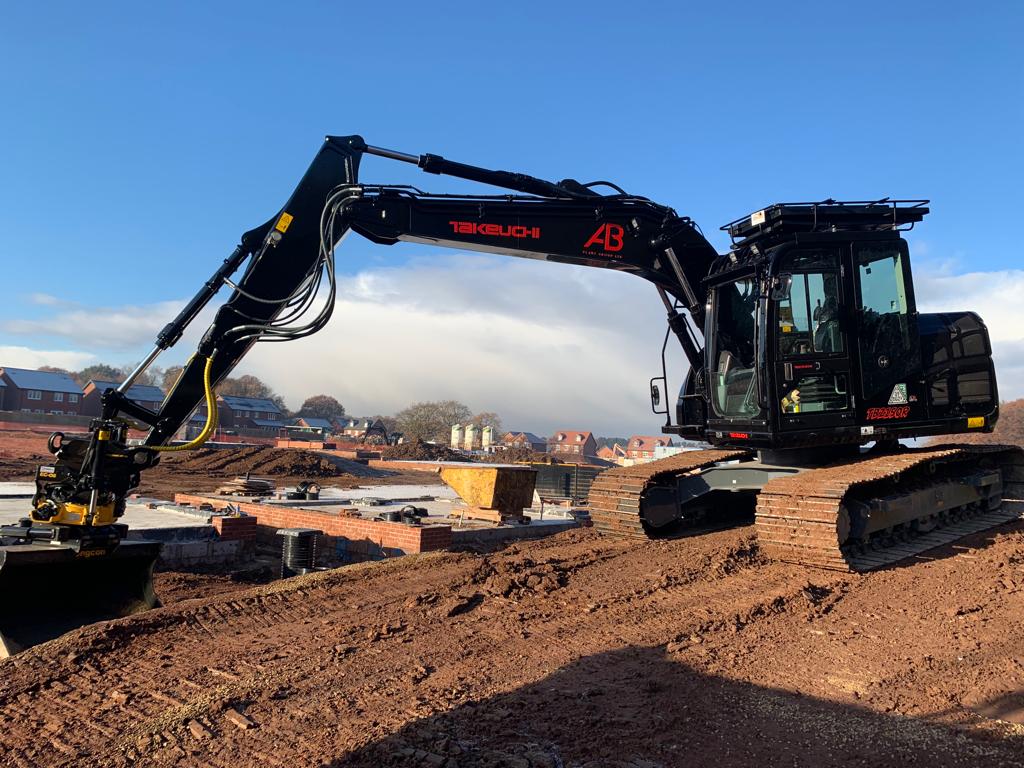
Choosing a civil engineering and groundworks contractor is really about confidence in delivery. For developers, house builders and principal contractors across the North West of England, the deciding factor is whether the team on the ground arrives with the right plant, the right operators and a plan that holds under pressure. At AB Civils and Groundworks we deliver that certainty because we own and operate our plant through AB Plant Group. When the machinery, the maintenance and the people are all aligned within one business, programmes keep their shape and sites feel controlled from first mobilisation to final handover.
Earthworks that set the pace for new build housing developments
For residential developers across the North West, earthworks represent the first major milestone in establishing a stable and reliable platform for construction. Because we operate our own fleet through AB Plant Group, we deliver earthworks that run predictably and safely from topsoil strip to final formation. Larger excavators handle bulk excavation and cut and fill operations at pace, while compact machines achieve precise trimming around plots, drainage runs and service corridors.
Plant availability is never left to chance. This means sequencing across drainage, foundations and external works stays aligned with the wider build programme. New build housing developers rely on this level of stability because it removes uncertainty and ensures foundations, roads, sewers and plot works can progress without disruption.
Civil engineering plant is the engine room of delivery
Roads and sewers depend on excavators that can work to line and level, trench rollers that achieve the specified compaction values and dumpers that move material safely and efficiently along tidy haul routes. Foundation packages depend on machines that can transition from bulk excavation to precise trimming and attendance, with compact units able to work within plots and around live services. Street works and Section 278 schemes depend on dependable rollers, accurate excavators and attachments that allow kerbs and tie ins to be set cleanly within tight possession windows. When that plant is operated by competent people and supported by a maintenance regime that prevents breakdowns, the difference on site is obvious. Progress is steady, inspections are smoother and everyone can plan the next step with confidence.
Plant at the heart of roads and sewers delivery
Supporting full infrastructure packages for developers
New build developers increasingly want a single contractor who can handle early-stage infrastructure as a combined package rather than splitting earthworks, drainage, road formation and kerbing across multiple teams. Because our plant, operators and engineers work together under one programme, we transition cleanly between these stages. This reduces handovers, avoids delays and keeps Section 38 and Section 104 adoption on track from start to finish.
Owning our fleet means we choose the right machine for the task rather than making do with what happens to be available. On bulk earthworks and formation we use larger excavators that move volume at pace while maintaining safe working distances. On deep drainage and manhole construction we balance reach and manoeuvrability with units that work accurately in confined conditions. On plots and around sensitive assets we put compact excavators to work with operators who know how to protect existing structures and services. For movement of spoil and materials we match dumper capacity to the output of the excavators so there is a clean flow that avoids bottlenecks. For compaction we rely on trench rollers and double drum rollers that achieve even finishes and verifiable values ready for testing and adoption.
Because the fleet is in house, plant scheduling follows the programme rather than the other way round. If weather compresses the window for road formation in Preston or Bolton, we bring additional rollers and operators so that momentum is recovered. If a drainage run in Warrington or Wigan reveals unexpected ground and the sequence needs to switch to external works for two days, we reallocate machines and crews without waiting in a queue. If a junction improvement in Chorley or on the edge of Manchester needs a night shift with specific attachments and task lighting, we prepare the exact combination and service it beforehand so the permit window is productive from the first minute.
Foundation packages built on the right machines
A well planned foundation package sets the pace for the build. The sequence from topsoil strip to bulk dig to trimming and plot foundations must run without unnecessary handovers. Larger excavators open up the ground and present clean formation, compact machines finish the details, and rollers prepare oversites and external levels ready for follow on trades. Where piling attendance is required, our operators coordinate with the piling team so that access, arisings and reinstatement are handled efficiently and tidily. Because we control the plant schedule, we can increase capacity for a short period to get plots back on sequence, or reassign a compact excavator to a drainage outfall to keep inspections on track.
For new build developers, foundations influence everything that follows. By controlling our own plant, we maintain a smooth, predictable flow of plots, ensuring groundworkers, bricklayers and follow-on trades have clear working areas without disruption. This developer-focused pacing is one of the biggest operational advantages of our in-house plant approach.
Infrastructure packages delivered with plant-led certainty
Early-stage infrastructure delivery demands consistency. By combining our plant, operators, engineers and supervisors into one coordinated team, we take responsibility for delivering complete infrastructure packages that include earthworks, drainage installation, road formation, kerbing, footways and external levels. This plant-led consistency removes delays, speeds up adoption processes and ensures developers get a reliable start to their build programme.
Street works and Section Two Seven Eight with confidence
Street works and Section Two Seven Eight activity brings additional scrutiny and the need for tight coordination. Working on or near the highway in Liverpool, St Helens, Wirral or Chester requires early planning for permits, clear method statements and dependable plant that will perform within the time allowed. Our teams prepare the machines, attachments and lighting, and our operators understand how to work tidily within traffic management and how to leave a clean finish that meets the specification for reinstatement. Tie ins, bell mouths and junction improvements depend on accuracy and a professional appearance as much as on productivity. When the plant starts first time and the crew knows the sequence, the night shift delivers real progress and the permit window is used effectively.
Because our plant is maintained by AB Plant Group, we know exactly what will arrive for a possession and we know it has been checked. That protects the window, reduces risk and gives highways officers the confidence that the works will be completed to the agreed standard. It also makes life easier for site teams, who can focus on the task rather than chasing availability.
Local knowledge, ground conditions and mobilisation
The local picture matters. Ground conditions vary across the North West, from the clays around Wigan and Warrington to sands and gravels nearer the coast, and to challenging material on parts of the Pennine edge and into Cumbria. Selecting the right plant for these conditions protects the programme and the budget. It influences bucket choice and trench support, it affects the compaction equipment used to achieve density without over working the material and it shapes the access plan so haul routes remain stable. Our plant team works with our engineers and site managers from tender through to delivery, which means those decisions are made early and refined as the project develops.
Safety, quality and the value of competent operators
Plant without competent people is just metal on tracks. Our operators are CPCS accredited and work as part of AB Civils delivery teams, not as a separate hire desk. The person in the seat understands the method statement, the specification and the sequence of the work. Daily checks, servicing and defect reporting happen as routine, not as an afterthought. A well maintained excavator with a skilled operator is quieter, cleaner and more precise. A trench roller that is serviced to schedule achieves the required density first time and protects the quality of the roads and sewers package. Health and safety is consistent because the same teams work to the same procedures with the same equipment.
The cumulative effect is a site that feels calm and a programme that feels reliable. Quality is planned and then protected on site. Formation levels, pipe bedding, chamber construction, compaction values and finishing details are treated as milestones, not as afterthoughts. Because plant, people and planners are in one business, communication is clear and action is quick. Inspectors can see the difference and sign off follows naturally.
Why clients choose AB Civils and Groundworks
Clients choose AB Civils and Groundworks for roads and sewers, foundation packages and street works because we bring certainty. We turn up with the tools and the people to make progress from day one in Manchester and the wider North West. We reduce reliance on third parties and we provide a consistent standard across sites. That means faster mobilisation, shorter response times, lower risk of downtime and a level of quality that stands up to inspection. Our operated plant division removes the uncertainty that often slows projects and replaces it with control and accountability. For you, that translates into fewer surprises, better coordination and a programme that keeps its shape.
AB Plant Group FAQs
What plant machinery does AB Plant Group provide?
AB Plant Group supplies a wide range of operated plant for civil engineering and groundworks projects, including excavators, dumpers, rollers, telehandlers and specialist attachments for drainage, foundations, earthworks and highway works.
What are the benefits of using a groundworks contractor with in-house plant?
Working with a contractor that owns and operates its own machinery means faster mobilisation, better maintenance control, fewer delays and one team accountable for both plant and delivery.
Do AB Plant Group machines come with CPCS-qualified operators?
Yes. Plant is supplied with experienced CPCS-qualified operators who understand civil engineering, drainage, road construction and foundation works, helping projects run safely and efficiently.
Can AB Plant Group support roads and sewers projects?
Absolutely. The fleet is regularly used for trench excavation, pipe laying, compaction, kerbing, carriageway construction and other works associated with Section 38 and Section 104 infrastructure.
What plant is typically used for foundation construction?
Foundation works commonly require excavators for trenching and bulk dig, dumpers for spoil removal, rollers for compaction and telehandlers for material handling. The right plant selection helps maintain accuracy and programme certainty.
How does in-house plant reduce project delays?
Because AB Civils controls its own fleet, machines can be deployed quickly, maintained proactively and reallocated as site priorities change, reducing reliance on third-party hire companies.
Where does AB Plant Group provide operated plant hire?
AB Plant Group supports projects across Lancashire, Greater Manchester, Merseyside, Cheshire, Cumbria and the wider North West from its base in Chorley.
Why choose AB Plant Group for operated plant hire?
Clients benefit from modern equipment, experienced operators and direct integration with AB Civils’ delivery teams, creating tighter control over safety, productivity and quality on site.